Showing posts with label Healthy Eating. Show all posts

Tuesday, May 27, 2014

Parsley - Top Plant

Petroselinum crispum var. neopolitanum
Flat-leaf parsley, Italian parsley
APIACEAE

Parsley is one of the most nutritious plants we have - so if you never grow anything else, grow some parsley!  An added bonus is that it is the most versatile plant for cooking with - I know I use it just about ever day, so there are an infinite number of ways of getting that green goodness into you.


I was brought up with parsley, but we hardly ever ate it, it was just used as a garnish - usually with a slice of orange!  This was always the curly leaf variety and my parents grew it in a mixed border with flowering annuals - I only discovered the flat-leaf variety when I came to Sydney in 1970's and had my first tabbouleh salad in a Lebanese restaurant.

My attitude to parsley changed instantly and I have grown some, wherever I have lived, ever since.  It is very easy to grow, prolific and I love its emerald green colour in the garden and versatility in the kitchen.
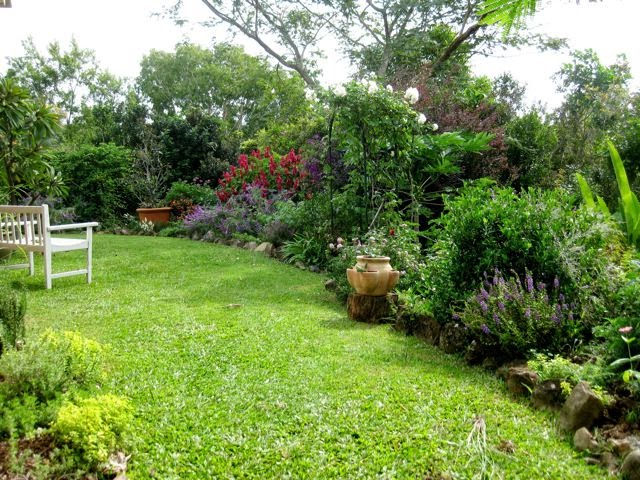
My back garden, where I grow parsley all the year round as part of the perennial border.

WHAT
  • There are more than 30 different varieties of parsley but the most easily identified are curly and flat-leaf.  To me the, the flat-leaf variety has a superior flavour and texture - stronger, nuttier and sweeter.  I also find that the curly variety is harder to eat - the curly bits tend to catch in the throat!
  • Flat-leaf parsley, also known as Italian parsley, is a hardy biennial, native to the Mediterranean that has been grown for more than 2000 years - originally for medicinal purposes and later for culinary use.
  • If you are a gardener, you would be familiar with perennials that return from year to year, and annuals that only last for one season.  Parsley belongs to a third group, called biennials, that need two years to complete their cycle of growth and setting seed.  In the first year it will only put on leaf; in the second it will start to produce flower stems - the continued production of leaves can be prolonged by nipping off those stems as soon as they appear.
  • However, I always allow some to flower as they are the most marvelous insect attractant and companion plant.  Being part of the carrot family, they give off that distinctive scent that helps to confuse and deter insects that may be looking for a meal in the plants around parsley - particularly anything in the cabbage family (brassicas).  So plant parsley throughout your garden.
Parsley, in flower.

HOW
  • Parsley is grown from seed and said to be hard to germinate - though I can't say I ever have that problem as it pops up as self-sown plants all over the garden.  If you are having trouble germinating the seed, try soaking it in water overnight.  Sow seed in containers and transplant into the garden as seedlings.
  • I prepare for planting the same way as the rest of the vegie garden - parsley loves rich soil that doesn't dry out too quickly, so add some compost.
  • Parsley also does well in pots - just make sure your container is deep enough as parsley has a long tap root.  I have had success in growing parsley in old olive cans - just make sure you put some holes in the bottom and don't let them dry out.
  • Parsley likes morning sun, but not intense heat all day.  It will not grow in full shade.
NUTRITIONAL BENEFITS
  • Fresh parsley is highly nutritious.  Just one cupful easily covers your daily vitamin C requirements and about a third of your vitamin A needs.  It is the highest food source of vitamin K.  It is also a useful non-dairy source of calcium, especially for anyone who eats few dairy products.
  • It also contains half of the recommended dietary intake of iron (20% for pre-menopausal women).  Just 25g of parsley provides more iron than a 200g pork chop.
  • Like other leafy green vegies, parsley contains significant quantities of lutein and zeaxanthin.  Population studies suggest that high intakes of these two antioxidants may help protect our eyes from vision problems involving free-radical damage, such as age-related macular degeneration and cataracts. (ABC Gardening Australia, Jayne Tancred, Naturopath and Nutritionist)
EVERY 30g (or half a cup) of FRESH PARSLEY CONTAINS:
(Daily Intake Requirements)

Vitamin K                                 553.9%
Vitamin C                                 53.9%
Vitamin A                                 14.2%
Folate                                        11.5%
Iron                                            10.4%
Copper                                      5.5%
Potassium                                4.8%
Calcium                                     4.1%
Magnesium                              4.0%
Fibre                                          4.0% 
Zinc                                            4.0%
Phosphorus                            2.5%
Vitamin B3                               2.5%
Vitamin B1                               2.5%
Manganese                              2.5%

So you can see that half a cup of parsley, added to your meal, may just about contain more vitamins and minerals than the meal itself?

USE IT TO MAKE +pesto +salads+soup+sauces+stuffing
Coleslaw with Parsley
All this talk about parsley made think about a good salad for dinner last night.  This is it!


Shredded cabbage (this can be any kind) - about 1 cup
1 carrot, shredded
1 cup parsley, freshly chopped
2 sticks celery, finely chopped
Handful of chopped mint and chives
1/4 walnuts, toasted
1/4 cup pepitas (pumpkin seeds), toasted
1 cup fennel, finely sliced (I use a mandolin)
1/4 cup currants, soaked for 30 minutes in water and then strained
2 desertspoons good quality egg mayonnaise
Salt and pepper

Toss it all together and serve.  I also drizzled with a little olive oil and a squeeze of lemon juice.  I served it on a bed of lettuce with a salmon quiche.

NOTE: The stems of parsley are more nutritious than the leaves, so don't throw them away!.

IMPORTANT NOTE: Although parsley is a rich source of folate, herbalists advise against eating more than 15g per day during pregnancy, because it is said to stimulate uterine contractions.

Source: Healing Foods, Miriam Poulunin, Dorling Kindersley (pub.) 1997


Saturday, May 4, 2013

Recipe: Minestrone Soup

This is one of those recipes where every family seems to develop their own variation insisting that "it's the best" - and I'm no different - this is the best!!  I have been cooking it for years, tweeking the recipe to suit my taste and honing the ingredients until it is just about perfect, every time - there's also a triple bonus - it's cheap to make, goes a long way and IS VERY HEALTHY.


It's funny, but in Italy - where minestrone soup comes from, it is one of the few recipes I have come across that is not strictly regional and can be varied from region to region, village to village and family to family (think bolognese sauce (Bologna), or napolitana (Naples)).

Now that autumn is here I can finally think about more hearty, warming meals - and this includes soups, and minestrone is right at the top of the list as far as family favourites go - children, and adults alike love it.  My secret is to cut the ingredients into small, and evenly diced pieces, and leave out cabbage - it won't keep as it makes it smelly (that sulphury, cabbage smell!), and cook it in lots of olive oil.

Recipe 

1 large brown onion chopped finely
1/2 cup olive oil
2 cloves garlic, finely crushed
2 cups finely diced carrot
2 cups finely diced celery
1 1/2 cups finely diced waxy potato
1 400gm can copped tomato
1 700ml jar tomato passata
Handful of finely shredded kale (doesn't smell) or fresh, chopped green beans (optional)
2 bay leaves
Sprig of fresh thyme
Salt and Pepper
1 400gm can organic kidney beans (or cannellini beans), strained
1 cup small dried pasta
750 ml filtered water.
Handful of fresh, chopped parsley
Freshly grate parmesan cheese

Method

Saute onion in olive oil in large heavy based saucepan.
Add diced carrot, garlic, celery and potato. Give it a stir for a couple of minutes
Add all other ingredients except pasta and canned beans,
Cook for 20 mins.
Adjust seasoning and amount of water.
Add pasta and beans and cook for further 10 minutes
Add parsley when cooked.
Serve topped with freshly grated parmesan

NOTE: I help out a a 'Stepping On' class -  management strategies and exercises for older folk who have had a fall or are becoming frail and afraid of falling.  Last week we were having a chat about Vitamin D and calcium - things that we need to help make our bones stronger, and I was thinking that this is a very nutritious dish that is high in calcium (and you could probably tick off just about every other essential vitamin and mineral as well).

As we age we need more calcium than in our middle years - about 1,200mg per day for the over 75's (50 year olds need about 1,000).  So one good serve of this soup will provide you with about half your daily calcium needs.

So where's the calcium in minestrone soup?  We'll take the three highest.

Parmesan Cheese: 100gm has 137mg calcium (the highest for any cheese)

Parsley:  100gm has 138mg calcium (a handful of fresh herbs on your food is often higher in vitamin and mineral content than the whole of the rest of the meal!!)

Kale: 100gm has 135mg calcium (any other fresh greens are good too)

Source http://www.healthaliciousness.com

For another calcium rich dish go to the zucchini bake recipe.

NOTE: You can freeze any soup that is left over.

Sunday, August 14, 2011

Obesity: The Dying Art of Eating

"Don't eat anything your grandmother wouldn't recognize as food" 
 Michael Pollan* (Food Rules)


Fat and NOT Happy:  Where did we go wrong?  How did we loose our sense of healthy eating and cooking that have sustained humans for thousands of years?


"If it comes from a plant,  eat it.  If it was made in a plant, don't" *

'Dibesity':  Almost every day we hear and read news stories about the epidemic of obesity that is sweeping the world and with it associated health problems like diabetes and heart disease. Elizabeth Farrelly (Sydney Morning Herald July 21 2011) wrote about the aptly named 'doughnut effect' in Sydney where the spike in obesity/diabetes was affecting the poorer outer suburbs - forming a 'fat circle' around the more affluent inner city ones which were largely untouched.

Conversely, the more affluent burgeoning middle classes of the emerging economies, like China and India, have in the last ten years seen an average 25% rise in obesity and with it diabetes.

In India, since 2000, 100 million people have become fat who were not fat before - a population the size of Germany! (BBC World Service Health Check)

This is the most serious medical and economic crisis that is affecting the whole world.  Our systems will not be able to cope with the pressures put upon it.


"Don't get your petrol and food from the same place"*

 Affluence is killing us: How did we allow ourselves to be so seduced by the global industrial food giants and fast food peddlers?  I am eternally grateful that I was too dumb for the Latin class at high school did Domestic Science and learnt basic cooking and nutrition instead - the most useful things I ever learnt.

"Eat FOOD. Not too much. Mostly Plants"* 

Most of the blame can be laid fairly and squarely on the industrialisation of our diet.

For the past sixty years we have been led a merry dance by the food industry, agog at all the claims they have been making about what kind of diet is good for us and hijacking the fundamentals of good nutrition. 

Nutritionism is good for the food business, but is it good for us?

All of our uncertainties about nutrition should not obscure the plain fact that chronic diseases that now kill most of us can be traced directly to the industrialization of food: the rise of highly processed foods and refined grains; the use of chemicals to raise plants and animals in huge monocultures; the superabundance of cheap calories of sugar and fat produced by modern agriculture; and the narrowing of the biological diversity of the human diet to a tiny handful of staple crops, notably wheat, corn and soy.*


Where is the life we have lost in living?

Where is the wisdom we have lost in knowledge?

Where is the knowledge we have lost in information?
Choruses from The Rock (1934)  T.S. Eliot

Teach Your Children Well:  Our town has recently had an almighty battle on it's hands to keep Woolworth's out - we lost.  I found out today that Woolworth's had been up to my granddaughters' primary school doing a PR spiel and offering 'free apples' - sounds like the wicked stepmother in Snow White to me!  Resist this kind of insidious bribery.

FACT:  Woolworths and Coles supermarkets currently have an 82% share of the food market sales in Australia.
(On a recent visit to Sydney I visited my children's old public school and was thrilled that they had achieved what I had tried to do 25 years ago - created a kitchen garden, installed a kitchen for them to cook in AND introduced gardening and cooking into the curriculum - Yeh!!..................)

Turning Back the Tide:  My unsung hero number 2 is Australian chef/cook book writer/ school food garden guru - Stephanie Alexander - a modern day King Canute.

Almost singlehandedly she has turned the tide with her food gardening/cooking school's programme which has been running since 2001.  Why did she do this?  Because she was working with trainee chefs that didn't know how a bean grew or how you harvested it.  Her store of knowledge from childhood had not been passed to the next generation.

FACT:  One can of soft drink has an average of TEN teaspoonfuls of sugar.  This is converted to fat in the body.

Children have to learn about how food grows and how to cook it.  This is where most the community/school gardens I have worked with, over the past 25 years,  have ultimately failed - NO harvesting/recipes/cooking/eating element was included in the grand design. 
The new kitchen garden at Vaucluse Public School, Sydney


We need to complete the circle of finding the shortest route from the earth, to the hand and the mouth.  Along with organic food gardening and nutrition, these subjects should be part of every school curriculum.

Armed with this knowledge we can make more informed decisions about what we put in our mouths and ultimately take responsibility for our own health and well-being.


*Ref. Pollan, Michael, In Defense of Food ; Food Rules, Penguin Press, 2008