Saturday, July 13, 2013

Mullumbimby Food and Soil Festival 2013


For the past three years our Community Garden has held an annual festival and this year is going to be bigger and better than ever with both Costa Georgiadis and Jerry Coleby Williams from ABC Gardening Australia.

For the first time in many years this event will be held in conjunction with the Mullumbimby Chamber of Commerce and involve the whole town.  They used to hold an annual event with the highlight being a fun run up Mount Chincogan - this will be re-instated at next year's event.  Maybe we can get Jerry and Costa to join in that next year?

This years Festival starts with a street parade through the town starts at 10.30 am on 1st September (first day of spring!!). It will make it's way to the Community Gardens where there will be lots of workshops, demonstrations, food, music, dance (I have a special interest in the Bollywood Dance performance!) which will keep going until 10 pm.

There will be lots of children's activities.  I am running a workshop on the value of herbs and growing food in small spaces.  The kiddies will be able to get involved and take home a potted up herb in an old container - i.e. and old work-boot or wellie (if you have any, I would love them!!)

If you have never been to Mullumbimby before you are in for a treat.  Come along and enjoy this Community Celebration and I look forward to seeing you there.

Thursday, July 4, 2013

Bananas - Top Plants

Bananas in the back garden.
TOP TIP: This is one plant and needs reducing to three stems if I want it to keep producing good fruit.  This is the same for all banana plants.

Bananas are one of those really valuable plants for the backyard gardener - a cornerstone plant valued in many parts of the world for their versatility and nutritional value.

At a recent talk in our Community Garden in Mullumbimby ABC gardening presenter Jerry Coleby Williams listed them as a key plant for a sustainable future - along with yams, perennial spinach (like kang-kung and Aztec spinach) and pigeon pea.  When choosing any plants for the garden we should be adopting a Permaculture principle (or just plain old common sense!) - does this plant perform more than one function, does it grow easily in your area and is it relatively trouble free? Bananas certainly fit this bill.  What would you add to that list of cornerstone plants?  I know that I would have papaya, sweet potato, nasturtiums and lemon grass.
Bananas - a cornerstone plant in this Balinese garden along with sweet potato, lemon grass, cassava, water spinach, chillies, coconuts and amaranth

This is, in fact, how communities, who don't have access to supermarkets and industrialized food,  exist on staple foods that fulfill for them the above criteria.  Let me give you an example.  I was working in Bali, helping to design a kitchen garden and cooking school for a hotel in Candi Desa and I was given a list of plants I HAD to include by the head gardener.  Most importantly were the three pillars of Balinese life (that's how he described them) Coconut Palms, Bamboo and Bananas - from this everything else flows; their food, ceremonial offerings, construction materials, utensils, crafts etc.  Every family compound will grow them - they also of course grow rice, but not in the compound.

So with the banana you get the dinner and the dinner service, plus they are packed full of nutritional value, they taste fantastic, are incredibly versatile to cook with and the plants look fabulous.
When I was teaching in Bali we used to get lunch for the students my friend Darta's traditional Balinese restaurant.  They would arrive in a basket, each individually wrapped in a banana leaf, pickles and rice separately folded in a little parcel.  And..........when we had finished all the scraps could go straight in the compost!  When I first went to Indonesia in the 1980's they didn't have the plastic/rubbish problems that they have now for everything they served up just like this.

WHY ARE BANANAS GOOD FOR YOU?
One large banana packs over 600mg of POTASSIUM which I eat every day to ward off cramps.

They are high in FIBRE and  and are abundant in a range of VITAMINS and MINERALS: vitamins A, C - the range of B's (including B6) and Folic Acid.


On the mineral scale Calcium counts in at 9.2 mg, Magnesium 44.1 mg, with trace amounts of iron and zinc. 

Putting all of the nutritional figures together clearly shows the banana is among the healthiest of fruits.

DEPRESSION: According to a recent survey undertaken by the Black Dog Institute in Sydney amongst people suffering from depression, many felt much better after eating a banana. This is because bananas contain tryptophan, a type of protein that the body converts into serotonin - known to make you relax, improve your mood and generally make you feel happier.
Beautiful bananas emerging from the flower.

HOW TO GROW BANANAS?
Bananas have been cultivated for so long that they have lost their ability to reproduce by seed - and therein lies the dilemma - because of problems with disease (like bunchy top) it is illegal to give away suckers to friends and neighbours.  But, don't despair banana growers, who are registered to supply suckers, are usually happy to let you have a few - that's how I got mine.

THE BANANA IS A VERY INTERESTING PLANT.  The green stems above the ground are, in fact, pseudostems (otherwise known as 'peepers' (don't you love it?)) and the true stem is a rhizome under the ground from which all parts of the plant emanate - including the flowers (see above drawing - it's been raining a lot so I have a lot of time on my hands!)  You can now understand why it's important to feed and mulch around the banana roots?  

HOW DO THEY FRUIT?  The flower stem travels up through a mature pseudostem producing both male and female parts - the bell at the bottom is the male part and the part that produces the fruit are the female flowers at the top.  Bananas are unusual in the plant world in that they are parthenocarpic - there is no pollination - hence no seed.  Fertilization is stimulated by a phytohormone within the plant.
Male bell flower at bottom of flowering stem (this doesn't produce fruit) with female fruiting body at the top.

CARE AND MAINTENANCE  Once a stem has fruited it will not produce again so you should remove it.  They are very easy to cut down and make a marvelous bio-degradable garden bed edge.  A banana plant will keep on producing stems, but you should limit these to THREE per plant otherwise fruit production declines.

Bananas are very fast growers and put on a lot of leaf and they therefore require a lot of water - that's why mulching is important - it prevents them drying out while feeding them at the same time.  They respond well to regular watering with compost tea and mulching with comfrey leaves - they like a bit of extra potassium (potash) - otherwise they are pretty care-free.

BATS, RODENTS and BIRDS also love bananas and it may be necessary to cover the developing bunches with a banana bag.

WHICH BANANA?  The most commonly grown banana is the Cavendish in fact the botanical name for bananas is Musa cavendishii.  A popular variety of the Cavendish is the 'Lady Finger - next is the more stubby sugar banana.  The odd thing is that the Cavendish is a smaller growing plant and more suitable for the home garden than the taller sugar banana.
A home grown bunch of Cavendish 'Lady Finger' bananas fruiting at hip height - pick as you go?  I have already cut off hands from the top once they began to ripen.

WHERE CAN YOU GROW THEM?  Bananas are typically a plant at home in the tropics and sub-tropics. They are best suited to a warm, frost-free, coastal climate and usually grow well as far south as Perth and Sydney. They need all day sunshine and moisture. 

WHEN TO CUT THE BUNCH of  FRUIT? The bunch should not be left on the on the plant once they begin to colour - you can remove them one hand at a time.  The bunch is ready to pick once the bananas fatten out - i.e. they lose their angular shape and ridges - this is usually about four months from the first unsheathing of the bell.  If you leave the bunch hanging for too long the fruit tends to split.

NOTE: Something that Jerry Coleby Williams was very passionate about were plantain bananas - the kind you use for cooking things like curries and using as a carbohydrate substitute instead of rice, potatoes, and cereals etc.  If you're looking for cornerstone plants for the future he believes that this is just about top of the list.  To be continued..........


Wednesday, June 26, 2013

The Pinnacle - NSW Border Ranges

On the road to the Border Ranges with the beating heart of the Tweed Valley-Wollumbin (Mt Warning) majestically taking centre stage.

Yesterday was our 41st wedding anniversary and as we were feeling as old as the hills we thought we might go for a walk in them!  The last time we had been to The Pinnacle was over ten years ago and yesterday I was blown away - all over again - by this incredibly magical spot which has one of Australia's most spectacular lookouts.
Views from The Pinnacle around the edge of this ancient volcanic rim.


The Pinnacle is a rock - no wider than me with my arms stretched out - that is perched on the edge of an ancient volcanic region - a caldera that is one of the largest and best examples of an erosion caldera in the world.  The Pinnacle drops 1,000m from the edge of the caldera to the Tweed Valley with vast views to the Pacific Ocean and Wollumbin (Mt. Warning) - the relic core of this vast volcano looming up in the middle of this 20 million year old crater at 1,156m.
Wollumbin and the sea from The Pinnacle

This region is like being in the middle of a giant pop-up book of living treasures.  Today, this area forms  less than one per sent of what was the country's largest expanse of lowland sub-tropical rainforest.  Thankfully it forms part of the World Heritage Gondwana Rainforests of Australia and hopefully, what remains, will be preserved forever.

HOW TO GET HERE:  The walk up to The Pinnacle is an easy 10 minute walk from the Tweed Ranges Scenic Drive on the Road between Uki and Kyogle.  It took us about and hour and a half from Mullumbimby via Mt Jerusalem.  A good reference source for walks in the area is Bushwalking in the Rainbow Region by Michael Smith.

And, just when you thought that this might be enough for one day there are more treasures that await you just around the corner.

BAR MOUNTAIN:  You will have passed the turning off to Bar Mountain on the way to The Pinnacle - don't miss it.  WHY? You can take a 30 minute walk into Australia's Gondwanic past and see groves of the Antarctic Beech tree whose descendants live among us 80 million years later and are living reminders that this continent was once part of a much larger one that included most of the current southern hemisphere.  The Antarctic Beech Northofagus moorei is as old as the pyramids and live and breather before our eyes! 
Most rainforest trees, contrary to what you would think, are quite shallow rooted - spreading their roots into the rich mulch in the uppermost surface of the soil.  In high winds, massive trees like this just get uprooted and crash to the forest floor.

NOTE:  This ancient forest took a tremendous battering in the recent storms with huge trees wrenched out of the ground and  tossed around like matchsticks.  But, already the Northofagus, with its habit of coppicing (growing stems from the base of the parent tree) is persistently surviving with masses of seedlings growing up around these coppice circles. 
A coppiced circle of ancient Antarctic Beech surrounded by dozens of seedlings - the struggle for survival that is 80 million years old continues!

Another reason to take this walk is that you will probably hear one of natures best mimics  - the Lyrebird.  You can't miss it.  As we began the Falconstrum Loop (named after the Falconstrum orchid which flowers here in early spring - something I have to go back for!) we heard the call of about ten different forest birds - one after the other, all coming from the same direction and VERY LOUD - this is Albert's Lyrebird which can mimic just about anything - including chainsaws!

PLACE ABOVE THE HORIZON
Up here at The Pinnacle it is easy to feel uplifted and free from the stresses of daily life.
Below you in little houses and towns people are busy living and building a future.
Here as you stand on the edge of this vast view you behold the bigger picture - the life of a valley born in the remains of a volcano 20 million years ago.
(National Parks sign at The Pinnacle)


Sunday, June 23, 2013

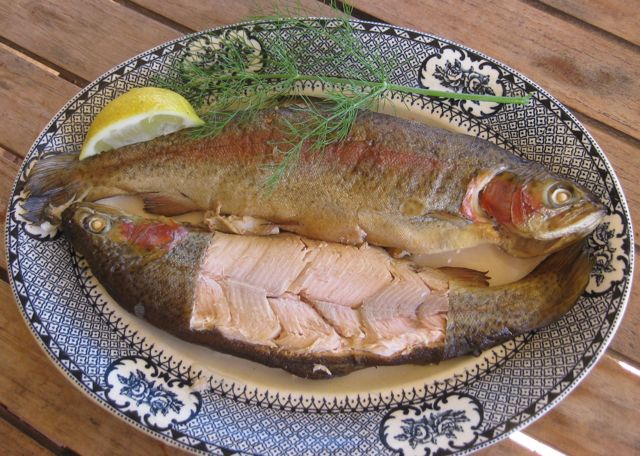
Home Smoked Trout

Yesterday I came upon some fresh trout at a third of their normal price and, of course, I had to buy them but I couldn't use all of them up at once.  It also seemed a waste to pop these beautiful fresh fish in the freezer - then I remembered a conversation I had a very long time ago with one of my daughter's friends.  Nick was always interested in food and went on to be part owner of one of the top cafe/eateries in Sydney, Single Origin.  Anyway, this particular day he was telling me about how to smoke your own fish at home in a wok using, as the smoking mixture, black tea, brown sugar and basmati rice.

I always thought that the process of smoking food would be incredibly complicated and time consuming, but no, it is really simple!   I have wanted to try it ever since then and it proved to very straightforward and quick - and we had beautiful smoked trout and poached eggs for breakfast.
Before smoking

This is a really easy way to make your own delicious smoked food.  As well as any kind of fish, you could use duck or chicken breast.  Experimenting with the smoking mixture is half the fun and I want to try adding to the tea mix some star anise and orange peel for the duck, and rosemary and thyme sprigs for the chicken - I'll let you know how it goes.

WHAT YOU WILL NEED
A wok
A cake trivet that fits snuggly just above the bottom of the wok
4 sheets of foil, to line the wok making sure you have some surplus at the top
A lid for the wok - I don't have one so I use a metal pizza tray
1/3 cup of basmati (or jasmine) rice, 1/3 cup black tea leaves, 1/3 cup brown sugar, mixed together - THIS IS THE SMOKING MIXTURE
After smoking

HOW TO MAKE IT
Line the wok with the foil
Put the mixed smoking mixture in the bottom of the wok and place the trivet over it
Lightly grease the top of the trivet (to stop the fish from sticking) and place the fish on top.
Have the lid ready, but don't put it on yet because you need to see when the mixture starts to smoke so you can time it.
Put the wok on a high heat - I use the wok burner of my barbecue and do it outside - just in case some of the smoke escapes.
As soon as the tea mixture starts to smoke seal the lid on the top with the foil and turn down heat to medium.
NOTE:  The smoke needs to circulate so don't have a lid that is too close to the fish.
Leave this smoking with the heat on for 10 minutes, then turn out the heat and leave for 5 minutes then remove the fish from the wok.  Don't leave the fish in the wok for any longer or the taste will deteriorate - think old bonfires!

NOTE: You can use any find of fish - whole or fillets.  If using fillets the thicker cuts are better.  Adjust the smoking time according to size, but always leave just for 5 minutes only after smoking.


Wednesday, June 12, 2013

Chelsea Flower Show - Aussies take 'Best in Show"


Image courtesy of Getty and AAP
Winning entry Australian Billabong Garden

The Queen, visiting the top prize winning entry of the Australian 'Trailfinders Gorge' garden at this years' Chelsea Flower Show in London in this, its centenary year. This was ninth time lucky for Wes Fleming (Flemings Nurseries) who with Melbourne garden designer Phillip Johnson came up with a billabong inspired landscape that reminded him of his childhood visits to the country - with rock gorge, gum trees, wildflowers, grasses and a 100 year old bottle tree (Brachychiton rupestris).  They set out to showcase the possibilities of sustainable landscaping within an urban setting. The billabong (small inland lake) and waterfall, that runs through the centre of the garden, was fed by water harvested from the roof of the BBC studio building and, wherever possible, they used recycled materials for the hard landscaping.  The sculpture like structure in the background was inspired by the beautiful red flowering waratah and doubles as a studio.

Why, you might ask, do I get excited by this and want to write an article about it?  Isn't it just a snobby kind of flower show for the Brits?  Well no, not exactly. Although the majority of exhibitors at Chelsea have always been British, there has been an international contribution ever since the first show in 1913, when the French rose growers Robichon had a stand. For an Australian garden to win is truly a wonderful achievement - and anything that puts gardening 'down under' on top is pretty damn fine!.  As Wes Fleming said 'I feel like the Usain Bolt of the gardening world'.
Trending at this years' Chelsea Flower Show - Allium sp. - ornamental onion flowers

Cate Blanchett (the actor) summed it up well in a recent radio interview when she was being asked about the local and international success of the Sydney Theatre Company, where she has been Artistic Director along with her husband Andrew Upton, when they wowed audiences in New York and London with the plays 'A Streetcar Named Desire' and 'Uncle Vanya' - with very flattering critical acclaim.  She agreed with the interviewer that Australia still seems to suffer from a certain amount of cultural cringe and Canberra (read decision makers) only seems to sit up and take notice when we have successes overseas. - only then does the funding start to flow a little more freely and more ambitious projects get the nod of approval.  Maybe this will change when Australia becomes a republic and our head of state is not 17,000km in Buckingham Palace.  The comedian Jerry Seinfeld made me cringe and laugh at the same time with this quote 'I love the Australian flag - Britain at night'!

So, if you are ever in London the last week in May - I highly recommend a visit.  As one German visitor was heard to say: 'This is the happiest day of my life'.  And, if you can't get to Chelsea go to some the other magnificent gardens around England like Great Comp, Kent in the photo below or Great Dixter in Sussex - and be inspired.

Great Comp, Kent - a magnificent and intimate private garden

NOTE: A strange thing happened on the way to the garden!!  We were in London last year while the Chelsea Flower Show was on.  The day before it opened my husband took me on a Magical Mystery Tour - the destination was to be a surprise.  We ended up here in Kent at Lullingstone Castle because he wanted to show me the World Garden that has been created by mad plant collector and gardener Tom Hart Dyke - this is his ancestral family home. (I saw him the next day commentating for the BBC from the Chelsea Flower Show!)


World Garden, Lullingstone Castle, Kent

Little did my husband know that I had been to Lullingstone many times before when I was a child.  About 55 years ago my primary school teacher used to take us kids, from the smoggy old city of London, for walks in the country and we would end up at places like this (there's also  the remains of a Roman Villa nearby).  I am sure these magical days out with Mr Cramp through bluebell woods and across fields of wildflowers, helped to sow the seeds of my lifelong love of the natural world - and gardening!  Being at Lullingstone after all that time was a very strange experience.

But, there were more surprises in store.I also did not know that my husband is distantly (very distantly!) related to the Hart Dykes and he had a grand old time wandering around as if he was lord of the manor!!

Lullingstone Castle, Kent


My husband especially wanted to show me this tomb in the chapel of Sir George Hart, knighted by Queen Elizabeth1 in 1587 - the chapel building pre-dating this period.  So we start this post with the second Queen Elizabeth and end with the first!

NOTE: The World Garden is laid out like a map of the globe and plants from every corner of it are planted where they were collected from - so as you walk around you are taken on a global botanical tour.  It's really well worth a visit.

In 2000 Tom Hart Dyke was on an orchid hunting trip in Central America when he was taken hostage by guerrillas - they thought he was a CIA agent.  In captivity he started to make a garden and was endlessly curious about the strange tropical plant world that he found himself in.  He thinks that his constant gardening, during this time,  and curiosity saved him - the guerrillas finally realised that he couldn't possible be a spy because he was obviously just plain loopy!


Monday, May 27, 2013

Ricotta: How to make from fresh milk

Tomorrow I am going to make a calcium rich cake (lemon, almond and ricotta) for the 'Stepping On' class that I help with  - it's our final session.  These are older folk that have had a fall or feel afraid that they might fall.  This is a serious scenario that affects the older age group,  their quality of life and ability to stay independent - something we all cherish.

Making your own ricotta, with a dairy farm of Jersey cows not far from me, makes common sense - and it is really simple (how that bloke gets up at 4am every morning to milk them is beyond me!).  However - thank you Mr. dairy farmer - and here we go!

2 litres fresh milk (8 cups)
250 gm plain yoghurt
Juice of one large lemon
Sea salt to taste

1.  Heat the milk in a heavy based saucepan to 90oc. (This is where you need a thermometer - see photo)
2.  Take off the heat and immediately lightly beat in the yoghurt and add the strained lemon juice and salt.  Stir a couple of times.
3.  The whey will separate from the curds.  Leave for about 15-20 minutes.
4.  Strain through fine large sieve lined with cheesecloth.  Drain for about 2 hours then refrigerate.
5. 2 litres of milk makes approximately 450 grams of ricotta (depending on the fat content of your milk)

Ricotta is a useful addition to lots of recipes.  Try these. (Simply click on the subject headings below and it will take you the appropriate page)
Berry and Ricotta Hotcakes 
Baked Mushrooms Stuffed with Ricotta
Strawberries and Ricotta on Toast for Breakfast (my favourite)
Baked Ricotta - delicious with home baked bread

And here's some other ways with milk:
Creme Caramel
Controlling powdery mildew on your veggies with milk!
And why not have a go at making your own yoghurt - it's easy

While we're at it - let's enjoy these beautiful camellias that I picked from daughter's garden - species unknown?


Friday, May 24, 2013

Recipe: Spicy Pumpkin and Coconut Soup

Dreamtime Beach, Fingal Head, NSW

Who left the freezer door open?  Suddenly we have gone from a day like this yesterday - where I had a beautiful swim at the beach - to a temperature drop of 10 degrees and freezing, lashing rain.  Soup weather?

I'm not a big fan of plain pumpkin soup - maybe because I wasn't brought up with pumpkin of any kind in the UK - people didn't eat it, it was fed to the pigs!  I remember trying to cook it when I first came to Australia as I saw it was a big part of the local cuisine.  Boiling pumpkin was not the way to go!  It took a long time before I tried it again and it became a different 'animal' after I roasted it - there's always a lot to learn!

This soup is simply delicious and easy to make.  A friend had given me a homegrown jap pumpkin that had a beautiful dense texture, deep orange colour and sweet nutty flavour - just what you want from a pumpkin.

It's also that time of year for harvesting ginger, turmeric, limes, chillies and coriander from the garden so a big pot of this soup steaming on the stove just makes sense.

SPICY PUMPKIN AND COCONUT SOUP

1.5 kg prepared pumpkin, skinned and cut into chunks
2 medium brown onions, cut into chunks
(these can be roughly cut because the finished soup will be blended)
2 large garlic cloves, crushed
1tbs fresh ginger, grated
1 tbs fresh, grated turmeric or 1 tsp dried powder
2tbs olive oil
2 small red chillies 
NOTE:  Put one in to start with and check for 'heat' - you can put it in, but you can't take it out!
1 tsp ground cumin
2 tsp ground coriander 
NOTE: It is infinitely better if these are freshly ground
1/2 tsp cinnamon
Sea salt to taste
1-1/2 litres water
400ml can coconut milk
Fresh coriander for garnish
Squeeze of lemon or lime juice (this is the secret ingredient!)

1.  Heat oil in large, heavy based soup pan.
2.  Saute onion and garlic, but do not let them brown.
3. Add ginger, chillies, cumin, turmeric and ground coriander and stir for a minute.
4.  Add pumpkin, salt and water.
5.  Put lid on and cook until pumpkin is tender - about 15 minutes
6.  Add coconut milk.
7.  Blend to smooth consistency with a stick blender (these are wonderful inventions!)
8.  Adjust salt, chilli and liquid - may need a tad more water - plus the juice of half a lime.
9.  Garnish with fresh coriander

GROWING YOUR OWN PUMPKINS

Pumpkins make a tasty and nutritious addition to many meals and are relatively easy to grow in the home garden - you just need a bit a space.  If you have limited space, one good way to grow them is over an arbour.  I saw this method to good effect when I was studying Permaculture at Crystal Water in Queensland - they used mesh fruit bags to hold up the weighty fruit.

Pumpkins (Cucubita spp.) are members of the Cucurbitaceae family along with zucchini, gourd, squash and cucumber. Technically a fruit, pumpkins have been in cultivation for more than 5000 years. This diverse group of frost-tender annuals and perennials has varied shapes, sizes, colours and patterns.  

Getting started
Pumpkin vines need fertile, compost-rich, well-drained soil in full sun and are most easily grown as ground-cover plants.  They are great in an orchard as a cover plant under fruit trees or in a part of the garden that is currently under-used (lawns!!).

In frost-free tropical and subtropical gardens, pumpkins can be grown all year round. In temperate Australia plant or sow outside after the last frost. Around our area they are grown as a late winter-autumn crop.


Diversity

The range of pumpkin varieties equals that of tomatoes. Golden Nugget is best for small gardens.   Jap pumpkin is best for sub tropical gardens.  Butternut can be grown just about anywhere.

Planting and growing
Pumpkin seed needs a soil temperature of 20˚C for germination. Raise seedlings by sowing them individually in 10cm pots and plant when pots are filled with roots. Alternatively, sow seed or plant seedlings into mounds of rich compost formed over loosened soil. Plants take 70–120 days to mature. As pumpkins are shallow-rooted they need regular watering in dry or windy weather. Even moisture helps prevent fruit splitting. I like to start them off in a circle of straw filled with compost.

Watering in the morning and spraying fortnightly with a solution of one part cows milk to 10 parts water helps prevent mildew. Mildew-eating ladybirds, which are patterned with yellow and black bands, help control mildew naturally. 

Harvesting and storing
Pinch out growing tips of rambling stems to contain plants. When fruits have finished swelling, remove them with as much of the stalk as possible. 


TOP TIP:  Ripe fruits with unbroken skin store very well if kept in a cool, dry, well-ventilated space. In fact, if you want a dense textured, rich tasting pumpkin you need to 'cure' it for a few weeks once you have picked it. Seed can be saved from fruit one month after harvesting them. Scoop seed from flesh, wash, dry and store in a cool, dry spot away from sunlight. 

Wednesday, May 22, 2013

The Golden Penda Spitfires

The Golden Penda

The street where I live is named after this beautiful tree - the Golden Penda which was recently in all of it's flowering glory after a particularly wet summer - it does best in the sub-tropics.

For all of you who have an aversion to 'proper' names for plants I might tempt you by telling you that it often holds the key to a beautiful description of the plant.  Take the Golden Penda Xanthostemon chrysanthus - which is Greek for golden flower with yellow stamens (xanthos - yellow, stemon - stamens, chrysos - golden, anthos - flower)*.  Having a love of plants takes you to all sorts of unexpected and interesting places - which leads me to these strange creatures that I found on a branch of the Golden Penda.


WHAT ARE THEY? The larval stage of a Perga species - otherwise known as sawflies - Aussie children know them as 'spitfires' because when aroused (as in the above photo) they raise up their rear ends and spit a yellowish liquid.  As they are generally found on eucalypts this can sting if it gets you in the eye.  This also tells me that the Golden Penda must come from the same general family as eucalypts  (Myrtaceae) for these creatures to have set up home on it's branches.

The eggs of this sawfly are deposited in slits in the leaves.  After hatching, the larvae remain in the same group, during the day, spread out over the tree to feed at night, re-assemble for the next day, and so on.  They leave the tree when fully fed and pupate in the soil emerging as adults - which is kind of wasp like.  The larvae really only do lasting damage to young trees and you would manage this by just pruning off the affected branch, mowing it up, and putting it in the compost! 

Yellow stamens, golden flower - the Golden Penda

WHERE AND HOW TO GROW IT  The Golden Penda is an Australian tree originating in the forests of south-east Queensland and is ideally suited to the sub-tropics (I never saw one in Sydney - too cold, not wet enough?).

It makes an ideal specimen or street tree which gets to about 5-7m.  It is has a compact, rounded canopy that really loves a good prune every now and again - other wise the branches can get a bit straggly.

It's quite drought hardy, but welcomes a good mulch - most of my neighbours just use grass clippings.
The nectar eaters moved in when it was flowering - the racket from the parrot orchestra was, at times, deafening - and then the bats moved in at dusk. (We actually had car loads of people driving by as word got round about this magnificent flowering spectacle - I can't wait for next year!)

* A fascinating reference book never far from my side: The Language of Botany, Debenham, C. published by the Society for Growing Australian Plants


Friday, May 17, 2013

Recipe: Lemon, almond and ricotta cake

We should be able to have a sweet treat and think that somehow it is doing us good too!!  This is one of those cakes.  It doesn't all have to be BAD!.  I just got thinking after the last post about calcium rich food - well, let's make something delicious for dessert that is also nutritious.  This cake has the added bonus of having no flour - for all the gluten intolerant folk - and as my husband said, as we were having a piece with afternoon tea - this is a real winner - it's absolutely delicious!

'Eureka' lemon tree weighed down with a bumper crop

Just also happens to be lemon season with the trees dripping with ripening citrus.  I met a lady (Amy) in the playground the other day, when I was taking one of my grandchildren for a swing, who told me that they had fruit trees planted all around their suburb (Ewingsdale/Myocum) as street trees that anyone could pick.  Her children were able to pick mandarins at will, and she felt sure that this is the reason why they were so healthy last winter?! Amy also told me that, where her sister lived in Melbourne, you could access a web map of public land that plotted all the fruit and nut trees - and also had a useful guide for when they where fruiting. What a good idea?!

We were playing in the park of a housing development on the ridge at the end of our road (well it used to be a ridge until they bulldozed it flat) and I was asked by the owners to make a 'sustainable landscaping plan'.  I never heard back from them after I suggested that the streets should be planted out with 'useful' trees that the residents could harvest on their way to school and while out walking.  Food forests don't work out of sight - which is where they wanted to put it.  I think I'm just about sick of empty rhetoric.  All of the our street trees should beautiful and useful - either to us or native fauna.  Nature strips should be full of food plants.  If you think I'm nuts look at the Cuban model after the USSR pulled the plug on aid money that they had been dependent on for decades - they turned a dire situation around in a few years and reaped the rewards of self-sufficiency, improved health and a viable economy - by growing food on public land, rejecting the commercialization of our food and growing organically.
(NOTE:  In these modern times of growing waistlines there are only two countries in the world that have managed to reduce their obesity rates - and they are the two countries that have gone broke - Cuba and Nauru - food for thought!  Read this article by Professor Gary Egger - founder of Gut Busters http://www.smh.com.au/national/health/fighting-fat-one-waist-at-a-time-20130531-2nh5m.html)
There, I'm done for now - let's have the recipe.


Lemon, Almond and Ricotta Cake

300g butter
1 1/2 cups castor sugar
4 eggs
2 cups almond meal *
3/4 cup fine polenta
1 1/2 tsp baking powder
Zest of 5 lemons and juice of 1 lemon
3/4 cup ricotta (you need the cake kind and not the creamed)
Icing sugar for dusting
*NOTE: I use bulk, whole almonds, with the skin on, and grind them myself - it's cheaper and adds extra fibre to the cake.

Preheat oven to 160oC
Line 26cm springform pan with non-stick baking paper.
In food processor beat together butter and sugar until creamy, add eggs one at a time.
Add remaining ingredients except icing sugar and ricotta.
Fold in ricotta so that it stays in lumps (that's the white bits in the photo above)
Pour into tin and bake for approximately one hour - test with a skewer that it comes out clean.
Cool completely in tin and serve with cream or yoghurt.

NOTE:  What is high in calcium in this cake -  almond meal, eggs, butter and ricotta.


Saturday, May 4, 2013

Recipe: Minestrone Soup

This is one of those recipes where every family seems to develop their own variation insisting that "it's the best" - and I'm no different - this is the best!!  I have been cooking it for years, tweeking the recipe to suit my taste and honing the ingredients until it is just about perfect, every time - there's also a triple bonus - it's cheap to make, goes a long way and IS VERY HEALTHY.


It's funny, but in Italy - where minestrone soup comes from, it is one of the few recipes I have come across that is not strictly regional and can be varied from region to region, village to village and family to family (think bolognese sauce (Bologna), or napolitana (Naples)).

Now that autumn is here I can finally think about more hearty, warming meals - and this includes soups, and minestrone is right at the top of the list as far as family favourites go - children, and adults alike love it.  My secret is to cut the ingredients into small, and evenly diced pieces, and leave out cabbage - it won't keep as it makes it smelly (that sulphury, cabbage smell!), and cook it in lots of olive oil.

Recipe 

1 large brown onion chopped finely
1/2 cup olive oil
2 cloves garlic, finely crushed
2 cups finely diced carrot
2 cups finely diced celery
1 1/2 cups finely diced waxy potato
1 400gm can copped tomato
1 700ml jar tomato passata
Handful of finely shredded kale (doesn't smell) or fresh, chopped green beans (optional)
2 bay leaves
Sprig of fresh thyme
Salt and Pepper
1 400gm can organic kidney beans (or cannellini beans), strained
1 cup small dried pasta
750 ml filtered water.
Handful of fresh, chopped parsley
Freshly grate parmesan cheese

Method

Saute onion in olive oil in large heavy based saucepan.
Add diced carrot, garlic, celery and potato. Give it a stir for a couple of minutes
Add all other ingredients except pasta and canned beans,
Cook for 20 mins.
Adjust seasoning and amount of water.
Add pasta and beans and cook for further 10 minutes
Add parsley when cooked.
Serve topped with freshly grated parmesan

NOTE: I help out a a 'Stepping On' class -  management strategies and exercises for older folk who have had a fall or are becoming frail and afraid of falling.  Last week we were having a chat about Vitamin D and calcium - things that we need to help make our bones stronger, and I was thinking that this is a very nutritious dish that is high in calcium (and you could probably tick off just about every other essential vitamin and mineral as well).

As we age we need more calcium than in our middle years - about 1,200mg per day for the over 75's (50 year olds need about 1,000).  So one good serve of this soup will provide you with about half your daily calcium needs.

So where's the calcium in minestrone soup?  We'll take the three highest.

Parmesan Cheese: 100gm has 137mg calcium (the highest for any cheese)

Parsley:  100gm has 138mg calcium (a handful of fresh herbs on your food is often higher in vitamin and mineral content than the whole of the rest of the meal!!)

Kale: 100gm has 135mg calcium (any other fresh greens are good too)

Source http://www.healthaliciousness.com

For another calcium rich dish go to the zucchini bake recipe.

NOTE: You can freeze any soup that is left over.

Thursday, May 2, 2013

Citrus: Pests and Diseases (scale,leaf miner, aphids, sooty mould,fruit fly)

Leaf miner damage on citrus - tell-tale silvery trails on new growth.

Scale (of all colours, shapes and sizes) leaf miner, aphids - and mealy bug, for that matter - are all known as SAPSUCKERS - because that is what they so - suck sap!  They are often noted as pests of citrus and there are simple remedies for controlling them that don't involve nasty chemicals - but more of that later - first things first.

As I stated before, on the previous post about citrus and caterpillars - your CITRUS WILL STAY HEALTHY IF THEY ARE KEPT HEALTHY!  They are heavy feeders and require regular, adequate amounts of water.  Go to that previous post for the full story on feeding citrus.

The next part of this story is about the ingeniousness of nature that makes you smile and mutter "clever critters"!

Before you notice scale damage on your citrus you will probably first notice ANTS, crawling up and down the stem, and maybe a BLACK SOOTY MOULD on the leaves and fruit.

Black aphids - typically on new growth of citrus

The ANTS come first.  What they want is the sweet excretions from the sapsuckers - known as HONEYDEW.  So, they pick up and take baby sapsuckers from tree to tree so they can have some tucker.  If you think about it - scale can't fly, so how do they get from one plant to another - well the ants do it for them.  The sap suckers then multiply and cause the damage - withering and curling of new leaves, distortion of fruit and die-back in new stems.

Scale and sooty mould on citrus
After the ants, sapsuckers and honeydew comes SOOTY MOULD.  This is a fungal spore that lives in the air and also lives off honeydew.  So these three - ants, sap suckers and sooty mould live in a symbiotic relationship - each reliant on the other.  Clever isn't it.

The sapsucker story!

Before you reach for the spray bottle think about the creatures out there that want to feed on these unwanted ones and try to encourage them first.  I'm talking about birds, lizards, ladybirds, lacewings, hoverflies, some wasps and these large, amazing insects - the mantids.  After all, as my friend Mary would say - it's just a big restaurant out there!  We have to try and get away from the 'creepy crawly' and 'enemy' attitudes to most creatures in the garden and realise that most of them are, in fact our friends.


 (Look at this previous post on design tips and how to encourage beneficial creatures in your garden)

In the meantime, here is a simple and effective remedy for controlling sap sucking insects, like scale, and for getting rid of sooty mould - the oil in the mix smothers them as they actually breathe through their exoskeleton (outer covering).  Don't be tempted to buy 'white oil' in an aerosol can - aerosol cans are non-recyclable and the oil base of the mix is often petroleum - total overkill.  Use sparingly as you may, unwittingly, be killing the beneficial insects too.

For a 1 litre spray bottle:

3 tbs cheap cooking oil (you don't need extra virgin for this!!)
4 drops washing-up detergent (acts as surfactant to mix oil with water)
1 litre warm water

Shake up and use when cool.  Do not use in heat of day in direct sunlight - leaves will cook!!  Needs a good shake every time you use it.  

NOTE: What to do if you notice sooty mould in large trees and ants going up and down.  In this case it's probably not practical to spray the tree.  Controlling the ants is the key by placing a band of double-sided sticky tape around the tree and covering it in something tacky.  You can buy commercial insect barriers for this (Green Harvest - 'Tanglefoot' Insect Barrier).  In the old days they would use Vaseline or old engine oil.  Some farmers made the mistake of applying this directly to the tree only to find that they had effectively 'ringbarked' them!


WASP GALL DAMAGE:  You may notice these swollen lumps on citrus branches - make sure you prune these and destroy them.  This is the damage that the burrowing wasp gall makes - if left, they will weaken the tree and eventually destroy it.


FRUIT FLY: A common pest of citrus.  These tiny flies lay their eggs in small groups just beneath the skin of the fruit where  the larvae hatch. Their feeding, and a rotting organism that is introduced when the eggs are deposited, quickly spoils the fruit.  Difficult to control once they have taken a hold - the trick is to get them early in the season by putting baits near plants that are prone to their damage.  Go to this link for effective home-made fruit fly baits.


CITRUS RUST MITE: This looks like bronzing on the fruit and is often mistaken for a nutrient deficiency whereas, in fact,  it is caused by a tiny mite  This is not to be confused with a small amount of brown markings to the fruit and leaves caused by storm and wind damage. CONTROL: Once this has taken a hold it is very difficult to control.  Infestation by this rust mite is indicative that the tree is under stress - lack of water, good soil and nutrients.  Mites very quickly develop resistance to pesticides so there is not point in reaching for the spray gun.  My advice is to destroy all the affected fruit, give it a hard prune and feed and mulch it.


Healthy limes from a healthy tree!

NOTE:  By following these few simple guidelines a lot of the common problems citrus growers have will not occur - i.e better fruiting and less pests and diseases.


For step-by-step notes on planting and pruning citrus go to this previous post.